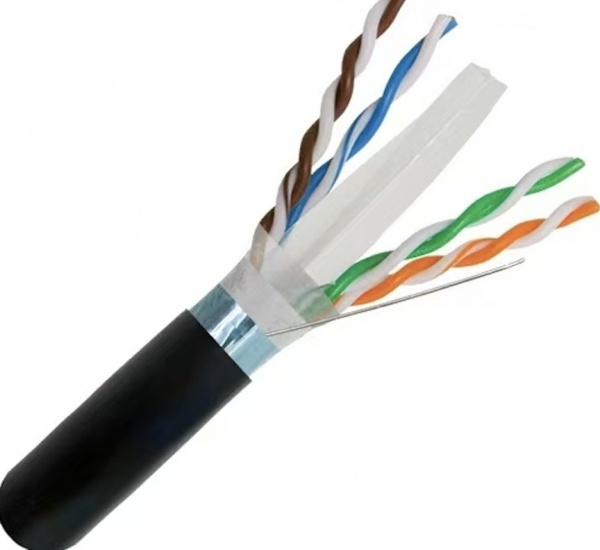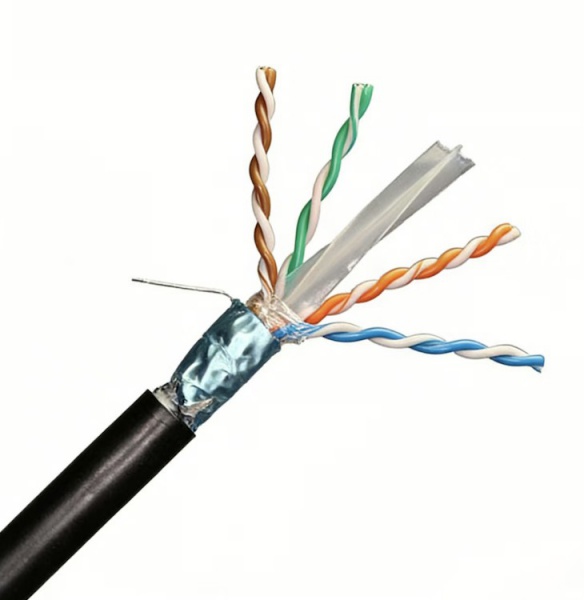
图片展示
English
  • 繁體中文
  • English
  • عربي
  • Русский язык
  • română
  • Português
  • Türkçe
  • Español
  • Italiano
  • IndonesiaName
  • Tiếng Việt

Related Products

24 Port POE Fast Ethernet Switch 24 Port PoE Switch with Gigabit Network Switch for IP Camera and Wireless AP

24 Port POE Fast Ethernet Switch 24 Port PoE Switch with Gigabit Network Switch for IP Camera and Wireless AP

Select the number of specifications

Please check the product information you want!

Product Detail


24 Port POE Fast Ethernet Switch 24 Port PoE Switch with Gigabit Network Switch for IP Camera and Wireless AP


PoE (Power over Ethernet) Switch

A PoE switch is a network switch that incorporates the ability to provide both data connectivity and electrical power to connected devices over the same standard Ethernet cable (Cat5e or higher). It follows IEEE standards to safely deliver DC power to Powered Devices (PDs).


Specification


  • PoE Standards & Power Budget:

    • PoE (IEEE 802.3af): Delivers up to 15.4W per port (12.95W guaranteed to device).

    • PoE+ (IEEE 802.3at): Delivers up to 30W per port (25.5W guaranteed to device).

    • PoE++ (IEEE 802.3bt):

      • Type 3: Up to 60W per port.

      • Type 4: Up to 100W per port.

    • Total Power Budget: The switch's internal power supply provides a finite pool of power (e.g., 370W, 740W). The sum of power drawn by all connected PoE devices cannot exceed this budget.

  • Port Configuration:

    • Port Count: Common configurations are 8, 16, 24, and 48 ports.

    • PoE Ports: May be 'all PoE' or a mix of PoE and non-PoE ports (often labeled as 'PoE+'). Ports are typically auto-sensing, detecting and supplying power only to compatible PDs.

  • Network Features: Includes standard switching capabilities: managed, smart managed, or unmanaged variants; Gigabit (10/100/1000 Mbps) or Multi-Gig (2.5G/5G/10G) speeds; VLAN support, QoS, etc.

  • Power Management: Managed PoE switches offer features like per-port power scheduling, priority setting, remote power cycling, and consumption monitoring.

  • Form Factor: Desktop, wall-mount, or rack-mount designs.


Advantage


  • Single-Cable Solution: The primary advantage. Eliminates the need to run separate power cables to each networked device, drastically reducing installation time, complexity, and cost. This is especially valuable for devices in hard-to-reach locations (ceilings, walls, poles).

  • Centralized Power Management: Power for all connected devices is supplied from a single, centralized, and often UPS-backed source. This allows for remote power cycling of devices and ensures they remain online during a local power outage if the switch is on backup power.

  • Flexibility and Scalability: Devices can be installed anywhere there is an Ethernet cable run, without being constrained by proximity to a power outlet. Adding new devices is as simple as plugging in a network cable.

  • Safety and Standards Compliance: IEEE standards ensure safe power delivery. The switch negotiates power needs with the device, provides over-current protection, and automatically shuts off power if a fault is detected or a non-PoE device is connected.

  • Reduced Clutter: Minimizes the number of power adapters ('wall warts') and associated power strips, leading to cleaner, more organized installations.


Application


  • IP Surveillance Systems: Powering and connecting IP security cameras, PTZ cameras, and video intercoms. This is one of the most common applications.

  • Wireless Networking: Powering Wi-Fi access points (WAPs) and wireless bridges, especially in ceilings, hallways, and outdoor areas.

  • Voice over IP (VoIP) Phones: Powering desktop IP phones from the network, requiring only one cable to the desk.

  • Access Control and Building Automation: Powering networked door access controllers, biometric readers, and smart locks.

  • Digital Signage & Retail: Powering networked digital displays, point-of-sale systems, and information kiosks.

  • Lighting (PoE Lighting/Hi-PoE): Using PoE++ switches to power and control LED lighting systems and fixtures in smart buildings.

  • IoT and Sensors: Connecting and powering a vast array of IoT devices like occupancy sensors, environmental monitors, and digital signage players.


Key Consideration: Always calculate the total power budget required by adding the maximum power draw of all connected PoE devices, plus a margin for future expansion. Ensure the switch's total power budget exceeds this sum. Use the correct PoE standard (e.g., PoE+ for a 20W AP, PoE++ for a 60W PTZ camera)

No comment

Product Detail


24 Port POE Fast Ethernet Switch 24 Port PoE Switch with Gigabit Network Switch for IP Camera and Wireless AP


PoE (Power over Ethernet) Switch

A PoE switch is a network switch that incorporates the ability to provide both data connectivity and electrical power to connected devices over the same standard Ethernet cable (Cat5e or higher). It follows IEEE standards to safely deliver DC power to Powered Devices (PDs).


Specification


  • PoE Standards & Power Budget:

    • PoE (IEEE 802.3af): Delivers up to 15.4W per port (12.95W guaranteed to device).

    • PoE+ (IEEE 802.3at): Delivers up to 30W per port (25.5W guaranteed to device).

    • PoE++ (IEEE 802.3bt):

      • Type 3: Up to 60W per port.

      • Type 4: Up to 100W per port.

    • Total Power Budget: The switch's internal power supply provides a finite pool of power (e.g., 370W, 740W). The sum of power drawn by all connected PoE devices cannot exceed this budget.

  • Port Configuration:

    • Port Count: Common configurations are 8, 16, 24, and 48 ports.

    • PoE Ports: May be 'all PoE' or a mix of PoE and non-PoE ports (often labeled as 'PoE+'). Ports are typically auto-sensing, detecting and supplying power only to compatible PDs.

  • Network Features: Includes standard switching capabilities: managed, smart managed, or unmanaged variants; Gigabit (10/100/1000 Mbps) or Multi-Gig (2.5G/5G/10G) speeds; VLAN support, QoS, etc.

  • Power Management: Managed PoE switches offer features like per-port power scheduling, priority setting, remote power cycling, and consumption monitoring.

  • Form Factor: Desktop, wall-mount, or rack-mount designs.


Advantage


  • Single-Cable Solution: The primary advantage. Eliminates the need to run separate power cables to each networked device, drastically reducing installation time, complexity, and cost. This is especially valuable for devices in hard-to-reach locations (ceilings, walls, poles).

  • Centralized Power Management: Power for all connected devices is supplied from a single, centralized, and often UPS-backed source. This allows for remote power cycling of devices and ensures they remain online during a local power outage if the switch is on backup power.

  • Flexibility and Scalability: Devices can be installed anywhere there is an Ethernet cable run, without being constrained by proximity to a power outlet. Adding new devices is as simple as plugging in a network cable.

  • Safety and Standards Compliance: IEEE standards ensure safe power delivery. The switch negotiates power needs with the device, provides over-current protection, and automatically shuts off power if a fault is detected or a non-PoE device is connected.

  • Reduced Clutter: Minimizes the number of power adapters ('wall warts') and associated power strips, leading to cleaner, more organized installations.


Application


  • IP Surveillance Systems: Powering and connecting IP security cameras, PTZ cameras, and video intercoms. This is one of the most common applications.

  • Wireless Networking: Powering Wi-Fi access points (WAPs) and wireless bridges, especially in ceilings, hallways, and outdoor areas.

  • Voice over IP (VoIP) Phones: Powering desktop IP phones from the network, requiring only one cable to the desk.

  • Access Control and Building Automation: Powering networked door access controllers, biometric readers, and smart locks.

  • Digital Signage & Retail: Powering networked digital displays, point-of-sale systems, and information kiosks.

  • Lighting (PoE Lighting/Hi-PoE): Using PoE++ switches to power and control LED lighting systems and fixtures in smart buildings.

  • IoT and Sensors: Connecting and powering a vast array of IoT devices like occupancy sensors, environmental monitors, and digital signage players.


Key Consideration: Always calculate the total power budget required by adding the maximum power draw of all connected PoE devices, plus a margin for future expansion. Ensure the switch's total power budget exceeds this sum. Use the correct PoE standard (e.g., PoE+ for a 20W AP, PoE++ for a 60W PTZ camera)

24 Port POE Fast Ethernet Switch 24 Port PoE Switch with Gigabit Network Switch for IP Camera and Wireless AP
Long press to look detail
Long by picture save/share
INQUIRY

在线询盘 MORE+
  • 联系人 *

  • 手机 *

  • 描述

  • Submit

  • Security Code
    Refresh the code
    Cancel
    Confirm

Inquiry Content:


You have no items to require

Add Successfully

Contact us

0086-755-23002989

 info@hotonlink.com

 hotonlink

 0086-18123718803

Room 506, 5th floor No.48 Huaide South Road,Cuigang Industrial Zone 4,Fuyong Street,Baoan Shezhen China 

(Post Code:518100)

Service

Support

Downloads

Company

About Us

Contact Us


Professional Cable Manufacturer Copyright © Shenzhen Hoton Link Technology Co.,Ltd;All Rights Reserved.

Online
TOP
Online
Online Contacts Qrcode
Tel
+86-755-23002989
Whatsapp
+86-18123718803
E-mail
info@hotonlink.com
QQ
3677965196
Wechat
hotonlink
Working Hours
Monday-Sunday
Qrcode
Scan me
Qrcode
Add me
TOP
添加微信好友,详细了解产品
使用企业微信
“扫一扫”加入群聊
复制成功
添加微信好友,详细了解产品
我知道了