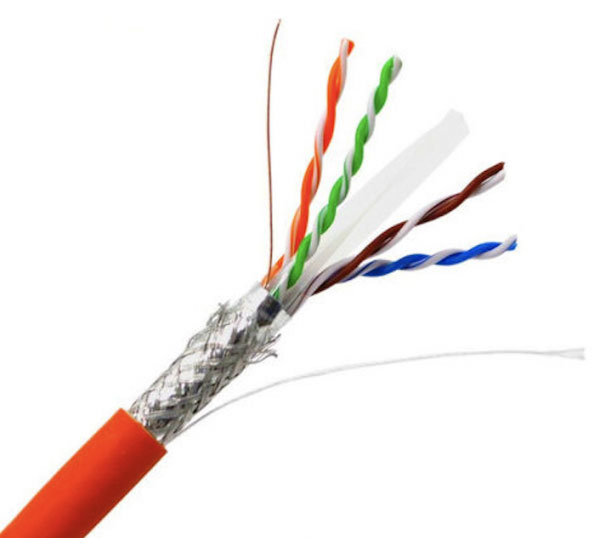
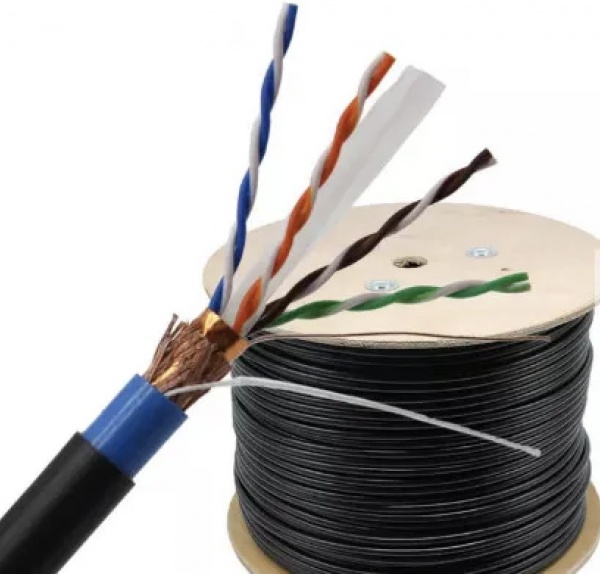
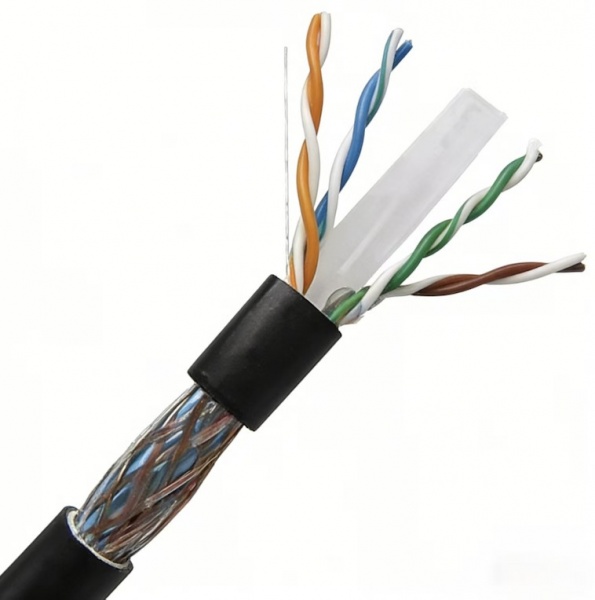
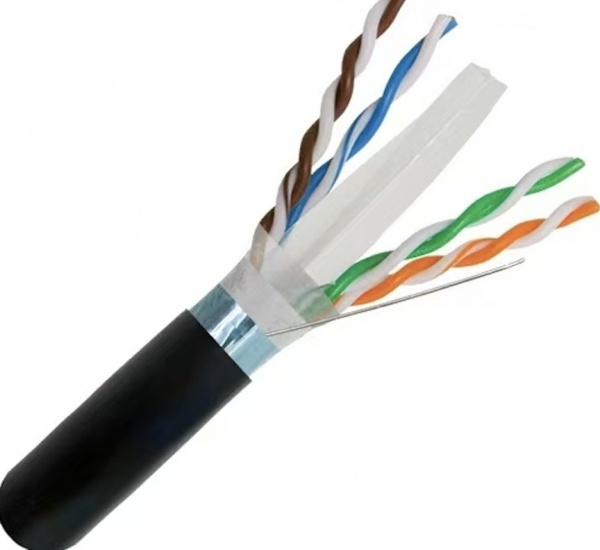
CAT6 Flat Traveling Elevator Cable with Power Wire

What are Elevator Cables?
Also known as traveling cables or lift cables, they are specialized cable assemblies designed for the unique demands of vertical transportation systems. They provide power, control, and communication between the moving elevator car and the fixed building structure.
1. Core Specifications & Construction
Elevator cables are complex, multi-conductor composite cables built for constant flexing, bending, and hanging in a vertical shaft.
Conductors:
Types & Materials: A mix of different conductors in one jacket.
Power Conductors: Fine-stranded, tinned copper for flexibility. Sized for car power, lighting, fan, and door operator motors (e.g., 16 AWG to 10 AWG).
Control/Signal Conductors: Smaller gauge (e.g., 20-24 AWG), often twisted pairs, for button calls, position sensors, and relay logic.
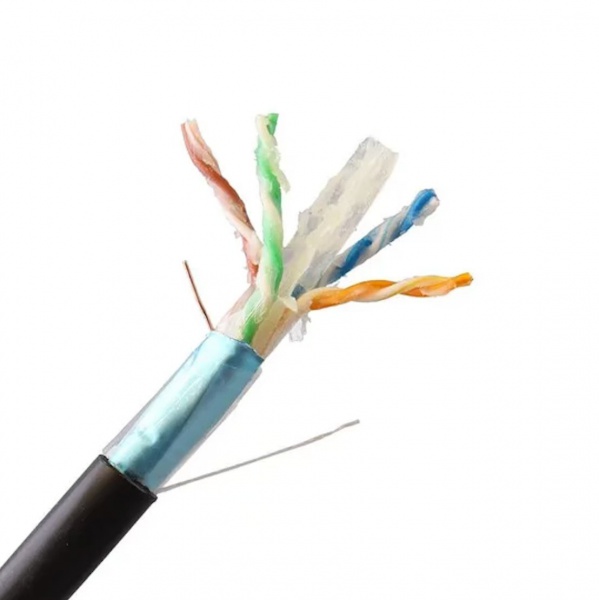
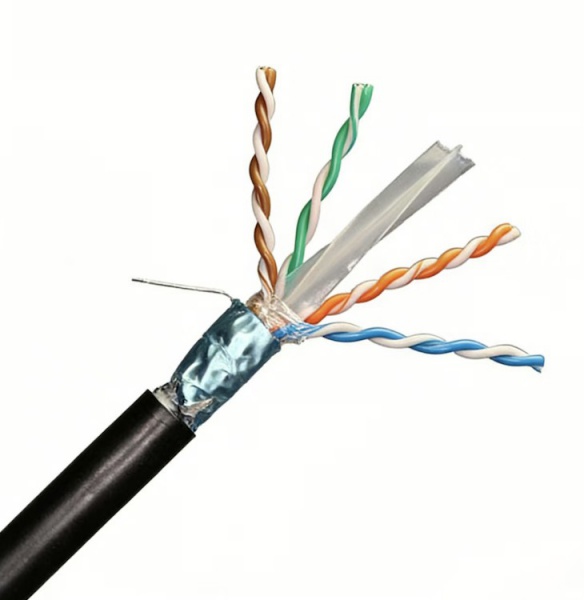
Data/Communication Conductors: Shielded twisted pairs (Cat5e/6) or fiber optic strands for modern systems with video surveillance, touchscreen panels, and network connectivity.
Insulation:
Materials: Specialized flexible PVC, Polyethylene (PE), or Thermoplastic Elastomer (TPE) to prevent adhesion between conductors during flexing.
Shielding:
Individual or overall braided or foil shields are used for data pairs and sometimes control pairs to protect signals from EMI generated by the traction motor and variable frequency drives (VFDs).
Fillers & Strength Members:
Central Steel Messenger Wire or Aramid (Kevlar®) Yarn: This is the most critical safety component. It is a non-electrical load-bearing element integrated into the cable core that supports the entire weight of the cable bundle, relieving tension from the electrical conductors. This prevents elongation and conductor breakage.
Jacket (Outer Sheath):
Materials: High-quality, flexible, and tough PVC, Polyurethane (PUR), or Chloroprene (Neoprene).
Properties: Must be flame-retardant (often complying with strict building codes like CMR/CL3R), oil-resistant, and have low smoke and zero halogen (LSZH) properties for passenger safety. It must also resist abrasion from cable guides and trays.
Key Mechanical & Electrical Specifications:
Bending Radius: Specified for fixed and dynamic conditions (e.g., over sheaves and in the car hoistway).
Bending Cycles: Rated for millions of flexing cycles (bending at top/bottom of travel and in the compensating loop).
Travel Length/Drop: Must be specified to match the building height, plus extra length for a service loop and bottom-of-shaft compensation.
Voltage Rating: Typically 300V or 600V for power conductors.
2. Key Advantages & Benefits
Proper elevator cables are engineered for safety, longevity, and uninterrupted operation.
Integrated Safety & Reliability: The integrated steel messenger wire is the primary safety advantage, ensuring the cable never relies on electrical conductors for mechanical support, preventing catastrophic failure.
Long Service Life Under Constant Stress: Designed for 20-30 years of continuous flexing, twisting, and hanging in a vertical shaft.
All-in-One Solution: Combines power, control, data, and sometimes video into a single, manageable cable bundle, drastically simplifying installation and reducing clutter in the hoistway.
Excellent EMI/RFI Immunity: Proper shielding protects control and data signals from the electrically noisy environment of the motor room and hoistway, preventing malfunctions and 'phantom' calls.
Flame Safety & Low Toxicity: LSZH and flame-retardant jackets are critical for passenger safety, preventing the spread of fire and toxic smoke in the elevator shaft.
Custom Configurability: Can be factory-assembled to exact length with the exact number and type of conductors required for a specific elevator model and building, with pre-molded connectors on each end.
3. Primary Applications
Elevator cables are the central nervous system of the elevator, connecting every electrical function of the car to the controller.
Traveling / Trailing Cable:
The main cable that moves with the elevator car. It is permanently fixed at the top of the shaft (or in the car) and hangs in a loop, bending at the top and bottom of each trip.
Carries: Main 3-phase power for the car, door operator power, car lighting, fan, control signals for all car buttons and indicators, alarm/intercom, and data for modern features.
Hoistway / Position Sensor Cables:
Fixed cables running the height of the shaft, connecting position sensors, limit switches, and landing call buttons back to the main controller.
Compensating Cables/Hoist Ropes:
In high-rise elevators, heavy cables/chains are used to balance the weight of the main traveling cable, ensuring consistent traction motor loading.
Car Top / Inspection Cables:
Flexible cables on top of the car for service and inspection controls, lighting, and emergency power.
Modern Integrated Systems: Today's cables often include:
Fiber optic strands for high-speed building network connectivity and future-proofing.
Coaxial cables for in-car video surveillance.
Shielded pairs for touchscreen panels and multimedia displays.
Selection & Specification Guide:
Specifying an elevator cable requires detailed planning:
Travel Distance: Total rise of the building (exact measurement critical).
Function Inventory: List every device in the car requiring a connection (motor HP, lights, buttons, displays, comms, cameras).
Conductor Count & Gauge: Determine the number and size of power, control, and data conductors needed.
Environmental Conditions: Oily shaft? High humidity? Requires specific jacket material (e.g., oil-resistant PUR).
Code Compliance: Must meet local building/fire codes (e.g., NFPA 70, NEC in the US).
Connectorization: Specify if pre-terminated with molded connectors (saves significant installation time).
Critical Rule: Elevator cables are safety-critical components. They must be designed, manufactured, and installed to exacting standards (often EN 50214, IEC 60245, or specific OEM specs). Using generic multi-conductor or control cable in this application is unsafe and will lead to premature failure, potentially stranding passengers. Always work with suppliers who specialize in elevator-rated cable systems.
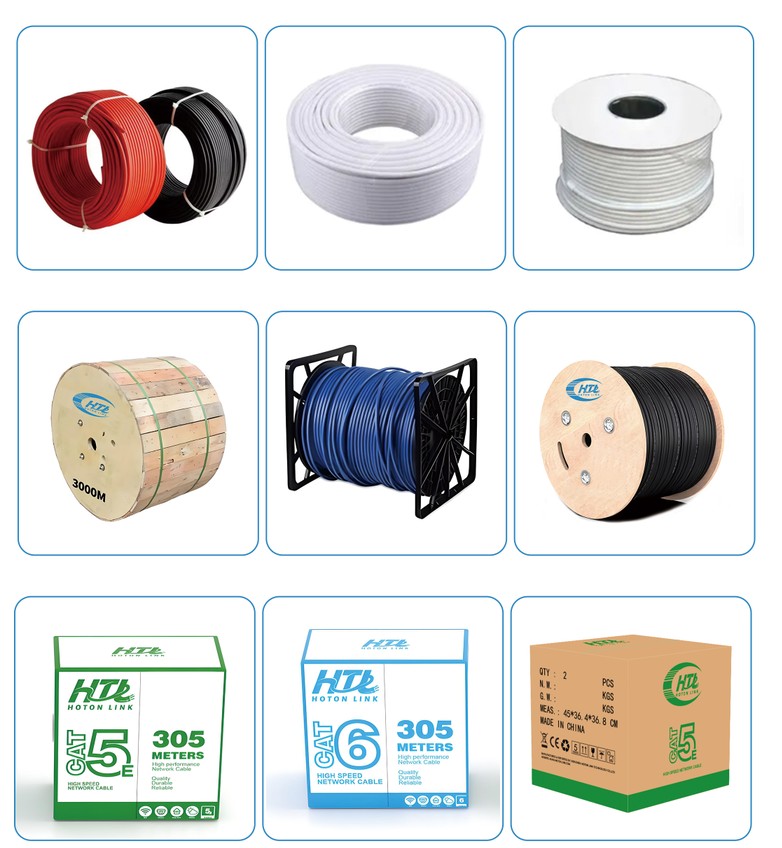
Package
FAQS:
Q1: Are you a factory or trading company?
A1: We are a manufacturer.
Q2: Where is your factory located? How can I visit there?
A2:Our factory are located in jieyang city. You can fly to Shenzhen or Guangzhou international airport. And tell us your flight No. We will arrange to pick you up.
Q3: How can I get a sample to test your quality?
A3:We can provide free samples for your test and checking, you just need to bear the freight charge.
Q4:What payment method do you accept?
A4:T/T(Bank transfer), Western Union, Money Gram, Paypal, etc.
Q5: Can you put my brand name (logo) on these products?
A5: Yes! The professional OEM services will be welcomed to us. Our factory accepts to make the logo free for bulk orders.
Q6: May I know the status of my order?
A6: Yes .The order information and photos at different production stage of your order will be sent to you and the information will be updated in time.
Q7: What’s the leading time? (How long do you need to prepare my goods?
A7: Delivery (no more than 1000pcs) will be arranged within 10-15 days after payment, and arrive you within about 1 month via sea shipping.
Q8: How will you deliver my goods to me?
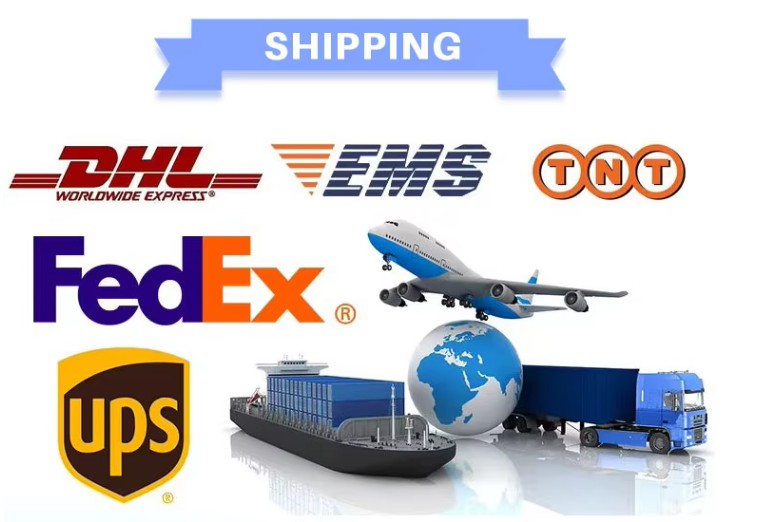
A8 Your purchases will be delivered by DHL, UPS, FedEx, TNT, EMS your door. Air Cargo and Sea Cargo, Direct line, Air Mail also be accepted according to clients' request.
Q9: Can you provide us more other products to us to help us to save more shipping costs?
A9: Yes. There’re kinds of Indoor Cables, Outdoor Cables, Coaxial Cables, Telephone Cables, Fiber Optic Cables and Accessories will be the main products line of Factory. The OEM bulk order will be accept as well.







 0086-755-23002989
 info@hotonlink.com
 hotonlink
 0086-18123718803
 Room 506, 5th floor No.48 Huaide South Road,Cuigang Industrial Zone 4,Fuyong Street,Baoan Shezhen China