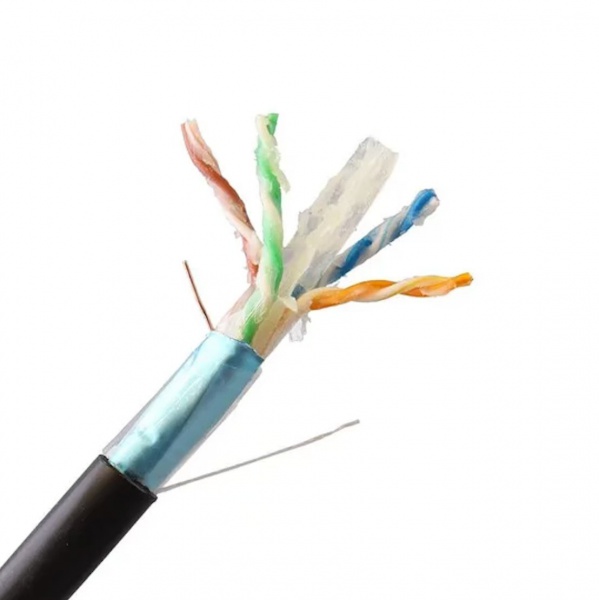
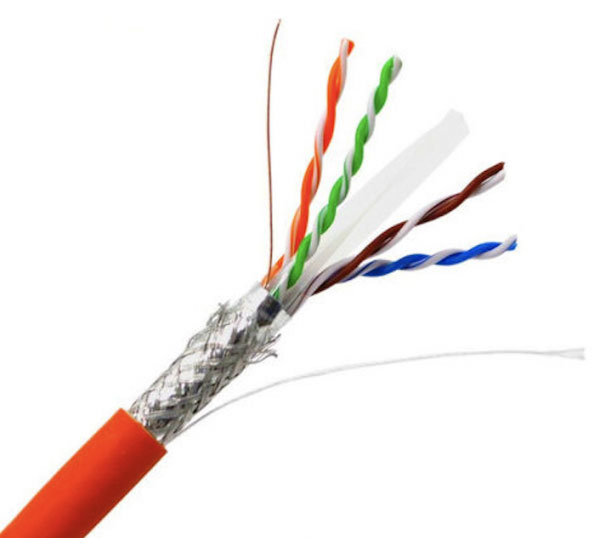
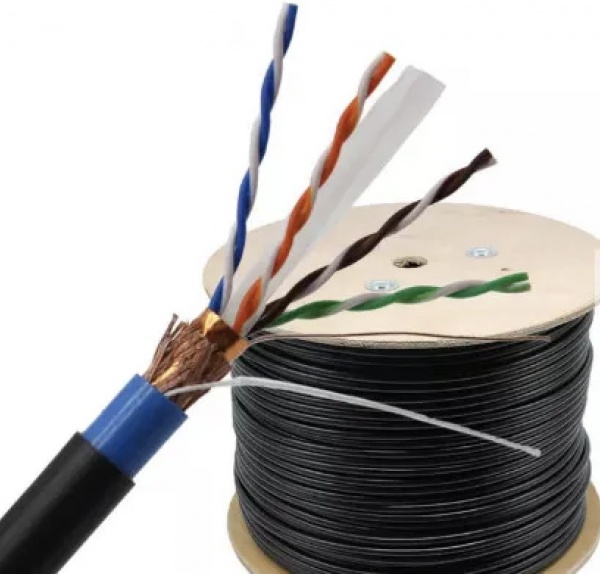
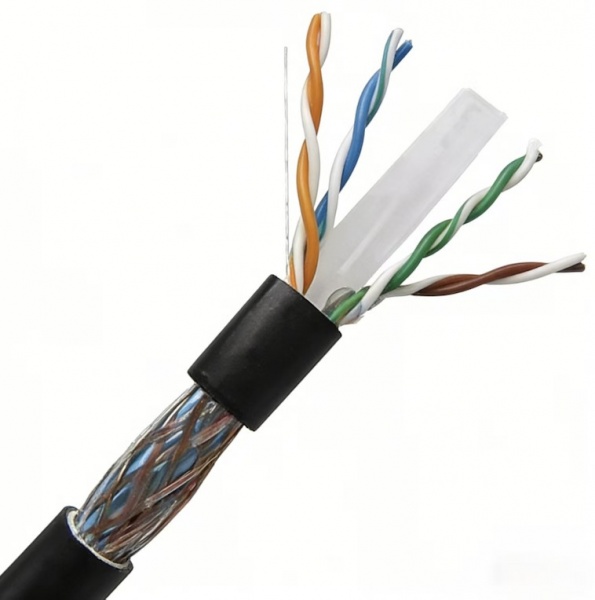
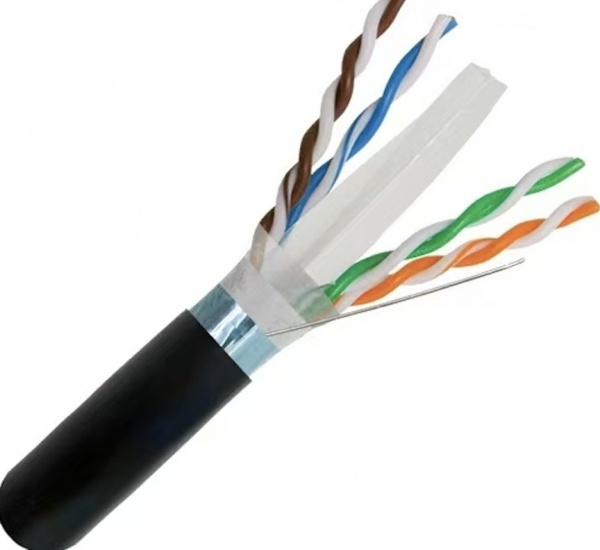
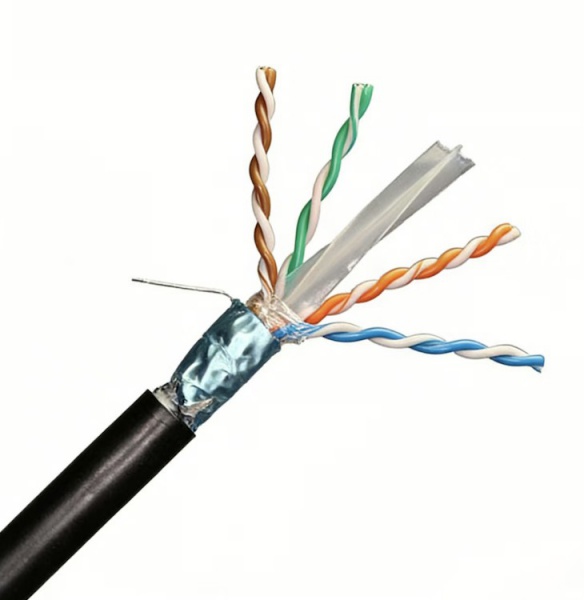
Outdoor Single PE Jacket CAT6 UTP Cable Lan Cable With 2DC Power Wire Power Electric Wire For CCTV Camera Security System

This is a hybrid composite cable that combines:
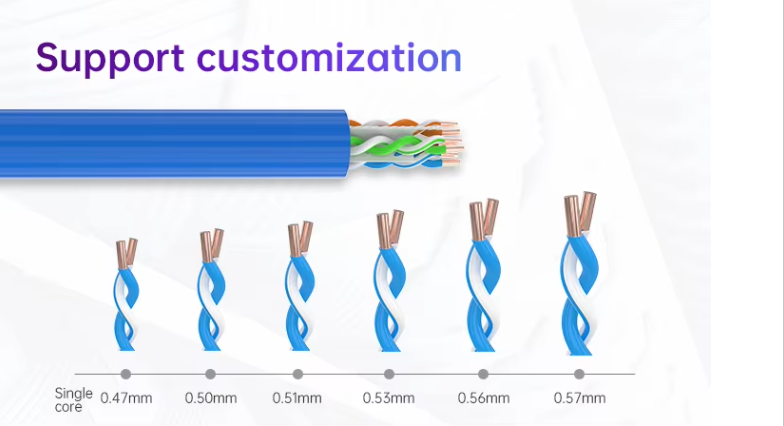
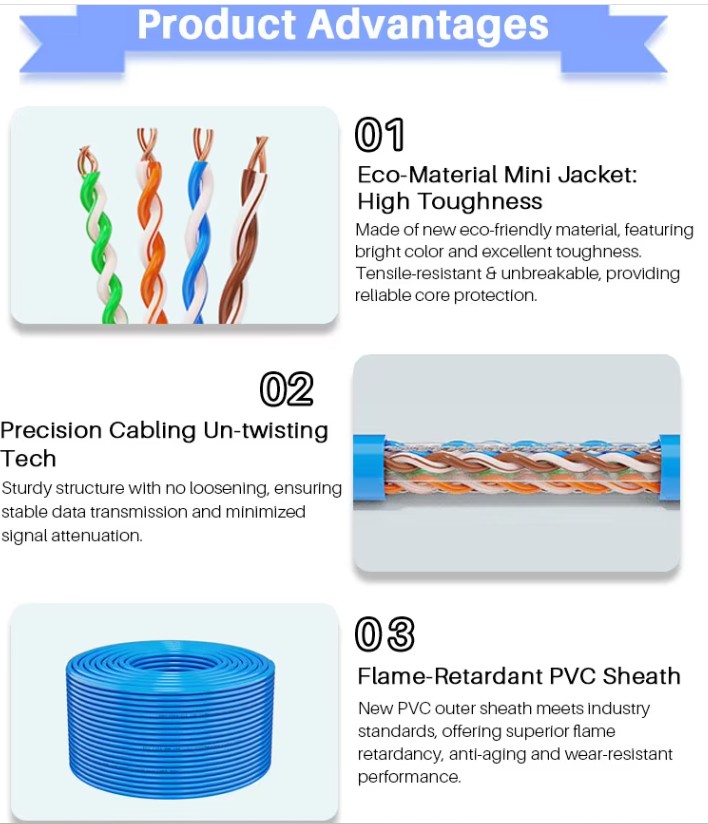
- 4 twisted pairs (8 conductors) for Ethernet data transmission (Cat6 standard)
- 2 additional insulated conductors for DC power delivery
All within a single integrated jacket, also called Power over Ethernet (PoE) extension cable or data/power hybrid cable.
Specifications
Electrical Specifications
Data Component (Cat6):
Category: Cat6 (250 MHz bandwidth)
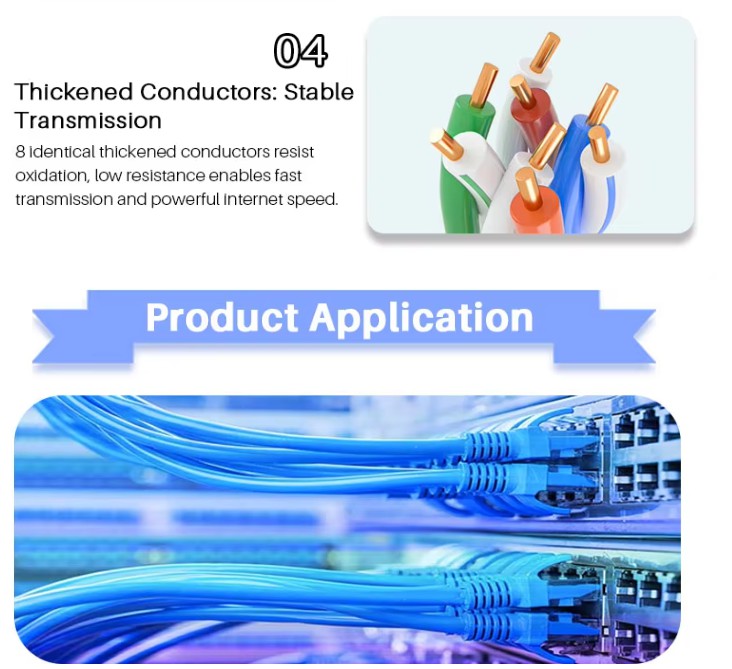
- Conductors: 8 x 23-24 AWG solid bare copper
- Performance: 1 Gbps at 100m, 10 Gbps at ≤55m
- Shielding: Typically UTP (unshielded) or sometimes FTP (foiled)
Power Component:
Conductors: 2 x 16-18 AWG solid copper
- Voltage Rating: Usually 300V or 600V
- Insulation: Thicker insulation on power wires (often different colors)
- Power Capacity: 5-20A depending on gauge and local regulations
- Maximum Voltage: Typically 48V DC for PoE applications, up to 300V for AC
Physical Construction
Cable Diameter: ~0.35' to 0.5' (9-13mm) - thicker than standard Cat6
- Jacket: Usually UV-resistant PVC or polyethylene for outdoor use
- Color Coding:
- Separation: Power conductors are positioned apart from data pairs to minimize interference
- Ripcord: Often includes for easy termination
Types Available
Indoor Rated (CM/CMR): For in-wall/conduit installation
- Outdoor Rated (CMX/CMU): UV-resistant, often gel-filled for moisture
- Direct Burial: With flooding compound and armored tape
- Plenum Rated (CMP): For air-handling spaces (rare, expensive)
Advantages
1. Installation Efficiency
- Single Run Installation: One cable pull instead of two
- Reduced Labor Costs: 30-50% faster installation
- Cleaner Appearance: Single cable is neater than separate data/power runs
- Simplified Planning: One pathway/raceway needed instead of two
2. Cost Effectiveness
- Lower Material Costs: One cable cheaper than two separate cables
- Less Conduit: Smaller raceway requirements
- Reduced Hardware: Fewer clips, ties, and supports needed
3. Performance Benefits
- Optimized Layout: Factory-controlled spacing minimizes EMI between power/data
- Predictable Performance: Engineered to meet both data and power specifications
- Voltage Drop Reduction: Larger power conductors (16-18 AWG) vs standard PoE (24-26 AWG)
4. Reliability & Safety
- Strain Relief: Power and data share strain relief at terminations
- Proper Insulation: Power conductors have appropriate insulation for voltage
- Code Compliance: Often UL/ETL listed as a complete assembly
Applications
1. IP Camera & Surveillance Systems
- Outdoor Security Cameras: Single cable for data and 12/24V DC power
- PTZ Cameras: Higher power requirements (up to 30W+)
- Thermal Cameras: Often need more power than standard PoE provides
2. Wireless Network Deployment
- Outdoor Wi-Fi Access Points: Especially 802.11ax/Wi-Fi 6/7 with high power needs
- Point-to-Point Wireless Bridges: For remote locations
- Small Cell/5G Nodes: Distributed antenna systems
3. Access Control & Security
- Electronic Door Locks: Power-hungry electric strikes
- Intercom Systems: Video door phones
- Gate/Barrier Operators: Where Ethernet control is needed
4. Digital Signage & Displays
- Digital Menu Boards: In restaurants, retail
- Wayfinding Kiosks: In airports, hospitals
- Advertising Displays: Bus stops, building exteriors
5. Industrial/Commercial IoT
- Building Automation: Sensors, controllers
- LED Lighting Control: Smart lighting with data connectivity
- Parking Systems: License plate readers, payment kiosks
6. Specialized Applications
- Marine/RV: For compact installations
- Temporary Events: Trade shows, festivals
- Retrofit Projects: Where running new conduit is difficult
Connection & Termination
Termination Options
Method 1: Dedicated Connectors
- Specialized Plugs: 10-pin connectors (8 data + 2 power)
- Custom Jacks: Wall plates with separate data/power ports
- Proprietary Systems: Manufacturer-specific solutions
Method 2: Separate Termination (Most Common)
- Data End: Terminate to standard RJ45
- Power End: Use separate screw terminals or DC plug
- Splitter Box: Use a junction box to separate functions
Method 3: PoE Extender Method
- Use 2-pair for data + 2-pair for power (non-standard, not recommended for Cat6)
Important Considerations & Limitations
1. Electrical Code Compliance
- NEC Class 2 vs Class 1: Most are Class 2 limited power (≤100VA)
- Power Limitations: Typically 48V DC, ≤60W per cable
- Separation Requirements: Some jurisdictions require data/power separation
- Plenum Spaces: Special plenum-rated versions needed for air-handling spaces
2. Performance Limitations
- EMI/RFI Concerns: AC power can interfere with data if not properly designed
- Voltage Drop: Calculate for long runs (>50m)
- Power Capacity: Limited by conductor size (16-18 AWG = 5-10A max)
- Distance: Power delivery distance limited by voltage drop, not data distance
3. Installation Challenges
- Termination Complexity: More difficult than standard Cat6
- Special Tools Needed: May require different strippers/connectors
- Bend Radius: Larger minimum bend radius (typically 8x diameter)
- Pulling Tension: Higher than standard Cat6
4. Compatibility Issues
- Standard PoE Switches: Cannot use - need separate power supply
- Equipment Interfaces: Most devices have separate data/power ports
- Testing Equipment: Standard cable testers won't test power conductors
- Future Upgrades: Difficult to upgrade one component without the other
Safety Warnings
- Never connect AC mains power to these cables unless explicitly rated for it
- Always fuse the power conductors appropriately
- Ground the power supply properly
- Use GFCI protection for outdoor installations
- Never run near high-voltage cables
- Verify local electrical codes before installation
- Label clearly as containing both data and power
When to Use vs. Standard PoE
Scenario | Composite Cable | Standard PoE | Separate Cables |
|---|
High Power (>30W) | ✅ Best choice | ❌ Limited to PoE+ (30W) | ✅ Good option |
Long Distance (>80m) | ✅ Better voltage drop | ⚠️ Voltage drop issues | ✅ Best option |
Simple Installation | ✅ Single pull | ✅ Single cable | ❌ Two pulls needed |
Future Flexibility | ❌ Locked together | ✅ Can upgrade independently | ✅ Most flexible |
Equipment Compatibility | ❌ Special termination | ✅ Universal compatibility | ✅ Universal |
Cost Sensitivity | ✅ Medium cost | ✅ Lowest cost | ❌ Highest cost |
Recommended Best Practices
- Plan Power First: Calculate voltage drop for the entire run
- Use Proper Connectors: Don't improvise with electrical tape
- Test Separately: Test data with certifier, test power with multimeter
- Document Everything: Label both ends with voltage/current info
- Use Surge Protection: Both data and power lines for outdoor runs
- Consider Future Needs: Will you need more power or data later?
- Buy Quality: Cheap versions may have inadequate separation/shielding
Top Brands & Products
- Axis Communications: Q-Series composite cables
- Ubiquiti: ToughCable Pro with power conductors
- Belden: DataTwist 3000 with power option
- Coleman Cable: MCQUAID series
- Alpha Wire: 6900 series composite cables
- Monoprice: Value-priced options
Price Range
- Indoor: $0.50-$1.50 per foot
- Outdoor/Direct Burial: $1.00-$3.00 per foot
- Plenum Rated: $3.00-$6.00 per foot
Final Recommendation
Use Cat6 with integrated power when:
- Installing IP cameras with high power requirements
- Deploying outdoor Wi-Fi access points
- Running cables in difficult pathways where multiple pulls are problematic
- You need to minimize installation time and labor costs
- Power requirements exceed standard PoE (802.3at/bt) limits
Consider alternatives when:
- Future flexibility is a priority
- Using standard PoE-enabled equipment
- Local electrical codes are restrictive
- You lack experience with proper termination techniques
- Budget is extremely tight (separate cables may be cheaper)
The Bottom Line: Composite data/power cable is a specialized solution that offers significant installation advantages for specific applications, particularly surveillance and wireless deployments, but requires careful planning and proper installation to ensure both network performance and electrical safety.
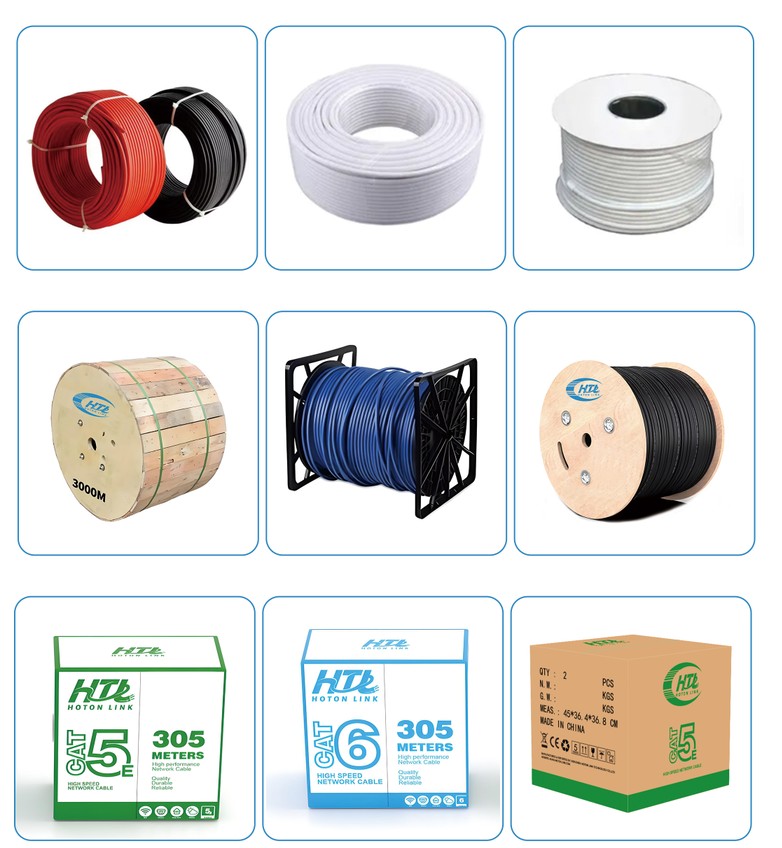
Package

FAQS:
Q1: Are you a factory or trading company?
A1: We are a manufacturer.
Q2: Where is your factory located? How can I visit there?
A2:Our factory are located in jieyang city. You can fly to Shenzhen or Guangzhou international airport. And tell us your flight No. We will arrange to pick you up.
Q3: How can I get a sample to test your quality?
A3:We can provide free samples for your test and checking, you just need to bear the freight charge.
Q4:What payment method do you accept?
A4:T/T(Bank transfer), Western Union, Money Gram, Paypal, etc.
Q5: Can you put my brand name (logo) on these products?
A5: Yes! The professional OEM services will be welcomed to us. Our factory accepts to make the logo free for bulk orders.
Q6: May I know the status of my order?
A6: Yes .The order information and photos at different production stage of your order will be sent to you and the information will be updated in time.
Q7: What’s the leading time? (How long do you need to prepare my goods?
A7: Delivery (no more than 1000pcs) will be arranged within 10-15 days after payment, and arrive you within about 1 month via sea shipping.
Q8: How will you deliver my goods to me?
A8 Your purchases will be delivered by DHL, UPS, FedEx, TNT, EMS your door. Air Cargo and Sea Cargo, Direct line, Air Mail also be accepted according to clients' request.
Q9: Can you provide us more other products to us to help us to save more shipping costs?
A9: Yes. There’re kinds of Indoor Cables, Outdoor Cables, Coaxial Cables, Telephone Cables, Fiber Optic Cables and Accessories will be the main products line of Factory.
The OEM bulk order will be accept as well.








 0086-755-23002989
 info@hotonlink.com
 hotonlink
 0086-18123718803
 Room 506, 5th floor No.48 Huaide South Road,Cuigang Industrial Zone 4,Fuyong Street,Baoan Shezhen China