图片展示
English
  • 繁體中文
  • English
  • عربي
  • Русский язык
  • română
  • Português
  • Türkçe
  • Español
  • Italiano
  • IndonesiaName
  • Tiếng Việt

Related Products

GYTC8S Armoured Outdoor Fiber Optical Cable 2-288Core

1. Place of Origin: China
2. Brand Name:Hoton Link
3.Fiber Type: 652D/G652B/G657
4. Minimum Order Quantity:20KM
5.Application:Long Distance and Communication and LAN

GYTC8S Armoured Outdoor Fiber Optical Cable  2-288Core

Select the number of specifications

Please check the product information you want!
Download Annex

Product Detail


GYTC8S Armoured Outdoor Fiber Optical Cable  2-288Core


Characteristic: Figure 8 Self-Supporting

Cable Type: Aerial Outdoor Fiber Optic Cable

Fiber Type: G.652.D 
Jacket Material: Polyethylene (PE)
Total Fiber Count: 6-8,10-12,14-24,30-72
Subunit Type: Gel-filled

Environmental Space: Aerial

Armor: Corrugated Steel Armoring


Technical data:


Numbers of fibers: 6-8,10-12,14-24,30-72

Design(Strength Member+Tube&Filler): Central Steel wires+Stranded Loose Multi-tube Cable

Fiber type: Single mode G.652.D

Strength Member: PSP

Loose Tube:  PBT

Filler Rope:  No

Water Blocking Layer(Material): Water Blocking tape

Additional Strength Member(Material):PSP

Outer Sheath:  PE

Cable Diameter(±0.2mm): 6.8*9.2*18mm;7*9.5*18.5mm

Cable Weight(±10.0kg/km): 210-250kg

Attenuation coefficient :  @ 1310nm≤0.35dB ;   @ 1550nm ≤0.2dB 

Min. bending radius Without Tension: 10.0×Cable-φ

Min. bending radius Under Maximum Tension: 20.0×Cable-φ


Description:


The fibers, 250μm, are positioned in a loose tube made of a high modulus plastic. The tubes are filled with a water-resistant filling compound. A steel wire locates in the center of core as a metallic strength member. The tube(and fillers) are stranded around the strength member into a compact and circular cable core. After an Aluminum Polyethylene Laminate(APL) moisture battier is applied around the cable core, this part of cable accompanied with the stranded wires as the supporting part are completed with a polyethylene(PE) sheath to be figure 8 structure.

figure 8 cable GYTC8Y, GYTC8Y are also available on request. 

This type of cable is specifically applied for self-supporting aerial installation.


Characteristics:


  • Good mechanical and temperature performance.
  • High strength loose tube that is hydrolysis resistant.
  • Special tube filling compound ensure a critical protection of fiber.
  • Crush resistance and flexibility.
  • PSP enhancing moisture-proof.
  • Two parallel steel wires ensure tensile strength
  • Small diameter, light weight and friendly installation
  • Long delivery length
  • Application:Self-supporting/Aerial


Single mode optical fiber (ITU-T Rec. G.652.D)


  • Fiber Characteristics:

Fiber Type:

1. Single Mode

2. This fiber type supports only one mode of light transmission, designed for long-distance communication with low attenuation and minimal signal distortion.

Fiber Material:

1. Doped Silica

2. The core is made of silica glass, doped with specific elements to achieve the desired refractive index profile for single-mode propagation.


  • Optical Performance:

Attenuation Coefficient:

1. @ 1310 nm: ≤ 0.35 dB/km

2. @ 1383 nm: ≤ 0.32 dB/km

3. @ 1550 nm: ≤ 0.21 dB/km

4. @ 1625 nm: ≤ 0.24 dB/km

5. Attenuation refers to the loss of signal strength over distance. These low attenuation values, especially at 1550 nm, make this fiber suitable for long-distance communications with minimal signal degradation.


Point Discontinuity:

1. ≤ 0.05 dB

2. This is the maximum permissible signal loss due to imperfections or discontinuities in the fiber, such as splices or connectors.

Cable Cut-off Wavelength:

1. ≤ 1260 nm

2. The cut-off wavelength is the point below which the fiber's performance degrades, making this fiber suitable for transmission above this wavelength.


  • Dispersion Characteristics:

Zero-Dispersion Wavelength:

1. 1300 ~ 1324 nm

2. The zero-dispersion wavelength is the point where chromatic dispersion is minimized, allowing the signal to travel with minimal spreading. This fiber is optimized for use in the 1300 nm to 1324 nm range.

Zero-Dispersion Slope:

1. ≤ 0.092 ps/(nm².km)

2. The dispersion slope is an important factor for managing signal spreading in wideband communications, particularly at higher wavelengths. This fiber exhibits a low zero-dispersion slope, meaning better control over dispersion.

Chromatic Dispersion:

1. @ 1288 ~ 1339 nm: ≤ 3.5 ps/(nm.km)

2. @ 1271 ~ 1360 nm: ≤ 5.3 ps/(nm.km)

3. @ 1550 nm: ≤ 18 ps/(nm.km)

4. @ 1625 nm: ≤ 22 ps/(nm.km)

5. Chromatic dispersion spreads light pulses over distance, causing signal distortion. These values show a higher dispersion at 1550 nm and 1625 nm, but still within acceptable limits for high-speed data transmission.


PMDQ (Polarization Mode Dispersion):

1. ≤ 0.2 ps/km¹/²

2. PMDQ is a measure of polarization distortion, which can affect high-speed signal integrity. This low value indicates excellent polarization performance, minimizing signal distortion in the fiber.


  • Physical Characteristics:

Mode Field Diameter:

1. @ 1310 nm: 9.2 ± 0.4 μm

2. The mode field diameter determines the effective light-carrying area in the core of the fiber. At 1310 nm, this fiber is designed with a precise mode field diameter to optimize performance and minimize coupling loss in connections.

Core/Clad Concentricity Error:

1. ≤ 0.5 μm

2. This represents the alignment between the core and cladding. A small concentricity error ensures the fiber has minimal loss due to misalignment in the manufacturing process.

Cladding Diameter:

1. 125.0 ± 0.7 μm

2. The cladding surrounds the core and helps to confine the light within the core. The precise cladding diameter ensures uniformity in the fiber.

Cladding Non-Circularity:

1. ≤ 1.0%

2. This value indicates how much the cladding deviates from a perfect circular shape. A low non-circularity ensures better optical performance and less loss.

Primary Coating Diameter:

1. 245 ± 10 μm

2. The coating protects the fiber from external damage while providing flexibility. The coating diameter is carefully controlled for consistency.

Proof Test Level:

1. 100 kpsi (= 0.69 GPa), 1%

2. The proof test level is the minimum tensile strength at which the fiber can withstand without breaking. This ensures the fiber’s mechanical reliability during installation.


Types of Figure-8 aerial optic fiber cable 

Figure 8 aerial cables are the mostly used type of aerial fiber optic cables.

  • GYAXTC8Y Figure-8 Steel wire Self-supporting Uni-tube with Aramid Yarns Fiber Optic Cable for Networks in Rural Areas Vast Countryside
  • GYFC8S Light Amored Self-supporting Figure 8 Cable
  • GYFC8Y FRP CSM Aerial Installation Optical Fiber Cable Figure-8 Self-supporting
  • GYFC8Y53 FRP CSM Double Sheath Aerial Installation Optical Fiber Cable Figure-8 Self-supporting
  • GYFTC8A | GYTC8A FRP CSM Aluminum Armored Aerial Installation Optical Fiber Cable Figure-8 Self-supporting
  • GYXTC8S Small PSP Armored Uni-tube Aerial Installation Optical Fiber Cable Figure-8 Self-supporting


How to Choose/Select Aerial Fiber Optic Cable?

Selecting the type of aerial fiber optic cable that your installation requires is a crucial decision that may have a vital influence on both performance and success or failure of the network. Let us examine the most important variables you should factor in while choosing an aerial fiber optic cable:


Cable Specifications and Performance Requirements 

  • Fiber Count: Decide the required number of fibers you will need for the current and anticipated future network, taking into account the bandwidth demand and scalability. 
  • Bandwidth Capacity: You will find out the capacity needed bandwidth to meet your network demands, and include the aspects of data transfer rates, latency, and type of applications to be used. 
  • Fiber Type: Choose the appropriate fiber type (single-mode for long distances, multi-mode for shorter distances), but first, take the factors like transmission distance and signal attenuation into consideration. But the most popular is G.652.D 


Environmental Factors and Weather Resistance 

  • UV Resistance: The cable's exposure to UV radiation needs to be resisted, just as sunlight radiation can affect performance. The employability of UV-resistant materials is vital for durability. 
  • Moisture Resistance: Visibly appealing moisture barriers on the cables must be chosen primarily for a damp environment in order to avoid possible signal degradation or damage. 
  • Temperature Range: Pick cables serving the extreme temperature conditions of the installation zone to ensure constant performance.

Strength and Durability for Long-Term Installations 

  • Tensile Strength: Assess the required tensile strength especially considering the design span length, wind load, and given cable weight. 
  • Mechanical Protection: The cable should be equipped with a sound and reliable protective sheathing, and in the case of added armor, it has to be of good quality. 
  • Rodent Resistance: Take cables with rodent-repellents features, especially in rodent-dense areas, to help against the damage.


Compatibility with Existing Infrastructure and Hardware

  • Connector Types: Make sure that the type of cable connectors is the right type that your existing network equipment uses, taking into consideration the most common types such as LC, SC, or ST. 
  • Mounting Hardware: The compatibility with aerial gears such as clamps, suspension devices, and messenger wires must also be ensured. 
  • Splicing and Termination Compatibility: The cable must be apt with the network’s splicing and termination methods, both for fusion splicing and mechanical connectors.


Additional Considerations 

  • Installation Ease: Find out the complexity of installation for the cable, as in the case of some cables they are more flexible or have features that help with installation. 
  • Regulatory Compliance: Verify that cable satisfies the industry requirements and regulations by such entities as the ITU, IEEE, or similar local authorities. 
  • Budget and Cost-effectiveness: Harmonize the performance needs with the expense by considering the initial investment and long-term maintenance and repair.


Package and Shipment


FAQS:

Q1: Are you a factory or trading company? 

A1: We are a manufacturer.


Q2: Where is your factory located? How can I visit there? 

A2:Our factory are located in jieyang city. You can fly to Shenzhen or Guangzhou international airport. And tell us your flight No. We will arrange to pick you up.


Q3: How can I get a sample to test your quality? 

A3:We can provide free samples for your test and checking, you just need to bear the freight charge.


Q4:What payment method do you accept?

A4:T/T(Bank transfer), Western Union, Money Gram, Paypal, etc.


Q5: Can you put my brand name (logo) on these products?

A5: Yes! The professional OEM services will be welcomed to us. Our factory accepts to make the logo free for bulk orders.


Q6: May I know the status of my order?

A6: Yes .The order information and photos at different production stage of your order will be sent to you and the information will be updated in time.


Q7: What’s the leading time? (How long do you need to prepare my goods?

A7: Delivery (no more than 1000pcs) will be arranged within 10-15 days after payment, and arrive you within about 1 month via sea shipping.


Q8: How will you deliver my goods to me? 

A8 Your purchases will be delivered by DHL, UPS, FedEx, TNT, EMS your door. Air Cargo and Sea Cargo, Direct line, Air Mail also be accepted according to clients' request.


Q9: Can you provide us more other products to us to help us to save more shipping costs?

A9: Yes. There’re kinds of Indoor Cables, Outdoor Cables, Coaxial Cables, Telephone Cables, Fiber Optic Cables and Accessories will be the main products line of Factory. 

The OEM bulk order will be accept as well.
No comment

Product Detail


GYTC8S Armoured Outdoor Fiber Optical Cable  2-288Core


Characteristic: Figure 8 Self-Supporting

Cable Type: Aerial Outdoor Fiber Optic Cable

Fiber Type: G.652.D 
Jacket Material: Polyethylene (PE)
Total Fiber Count: 6-8,10-12,14-24,30-72
Subunit Type: Gel-filled

Environmental Space: Aerial

Armor: Corrugated Steel Armoring


Technical data:


Numbers of fibers: 6-8,10-12,14-24,30-72

Design(Strength Member+Tube&Filler): Central Steel wires+Stranded Loose Multi-tube Cable

Fiber type: Single mode G.652.D

Strength Member: PSP

Loose Tube:  PBT

Filler Rope:  No

Water Blocking Layer(Material): Water Blocking tape

Additional Strength Member(Material):PSP

Outer Sheath:  PE

Cable Diameter(±0.2mm): 6.8*9.2*18mm;7*9.5*18.5mm

Cable Weight(±10.0kg/km): 210-250kg

Attenuation coefficient :  @ 1310nm≤0.35dB ;   @ 1550nm ≤0.2dB 

Min. bending radius Without Tension: 10.0×Cable-φ

Min. bending radius Under Maximum Tension: 20.0×Cable-φ


Description:


The fibers, 250μm, are positioned in a loose tube made of a high modulus plastic. The tubes are filled with a water-resistant filling compound. A steel wire locates in the center of core as a metallic strength member. The tube(and fillers) are stranded around the strength member into a compact and circular cable core. After an Aluminum Polyethylene Laminate(APL) moisture battier is applied around the cable core, this part of cable accompanied with the stranded wires as the supporting part are completed with a polyethylene(PE) sheath to be figure 8 structure.

figure 8 cable GYTC8Y, GYTC8Y are also available on request. 

This type of cable is specifically applied for self-supporting aerial installation.


Characteristics:


  • Good mechanical and temperature performance.
  • High strength loose tube that is hydrolysis resistant.
  • Special tube filling compound ensure a critical protection of fiber.
  • Crush resistance and flexibility.
  • PSP enhancing moisture-proof.
  • Two parallel steel wires ensure tensile strength
  • Small diameter, light weight and friendly installation
  • Long delivery length
  • Application:Self-supporting/Aerial


Single mode optical fiber (ITU-T Rec. G.652.D)


  • Fiber Characteristics:

Fiber Type:

1. Single Mode

2. This fiber type supports only one mode of light transmission, designed for long-distance communication with low attenuation and minimal signal distortion.

Fiber Material:

1. Doped Silica

2. The core is made of silica glass, doped with specific elements to achieve the desired refractive index profile for single-mode propagation.


  • Optical Performance:

Attenuation Coefficient:

1. @ 1310 nm: ≤ 0.35 dB/km

2. @ 1383 nm: ≤ 0.32 dB/km

3. @ 1550 nm: ≤ 0.21 dB/km

4. @ 1625 nm: ≤ 0.24 dB/km

5. Attenuation refers to the loss of signal strength over distance. These low attenuation values, especially at 1550 nm, make this fiber suitable for long-distance communications with minimal signal degradation.


Point Discontinuity:

1. ≤ 0.05 dB

2. This is the maximum permissible signal loss due to imperfections or discontinuities in the fiber, such as splices or connectors.

Cable Cut-off Wavelength:

1. ≤ 1260 nm

2. The cut-off wavelength is the point below which the fiber's performance degrades, making this fiber suitable for transmission above this wavelength.


  • Dispersion Characteristics:

Zero-Dispersion Wavelength:

1. 1300 ~ 1324 nm

2. The zero-dispersion wavelength is the point where chromatic dispersion is minimized, allowing the signal to travel with minimal spreading. This fiber is optimized for use in the 1300 nm to 1324 nm range.

Zero-Dispersion Slope:

1. ≤ 0.092 ps/(nm².km)

2. The dispersion slope is an important factor for managing signal spreading in wideband communications, particularly at higher wavelengths. This fiber exhibits a low zero-dispersion slope, meaning better control over dispersion.

Chromatic Dispersion:

1. @ 1288 ~ 1339 nm: ≤ 3.5 ps/(nm.km)

2. @ 1271 ~ 1360 nm: ≤ 5.3 ps/(nm.km)

3. @ 1550 nm: ≤ 18 ps/(nm.km)

4. @ 1625 nm: ≤ 22 ps/(nm.km)

5. Chromatic dispersion spreads light pulses over distance, causing signal distortion. These values show a higher dispersion at 1550 nm and 1625 nm, but still within acceptable limits for high-speed data transmission.


PMDQ (Polarization Mode Dispersion):

1. ≤ 0.2 ps/km¹/²

2. PMDQ is a measure of polarization distortion, which can affect high-speed signal integrity. This low value indicates excellent polarization performance, minimizing signal distortion in the fiber.


  • Physical Characteristics:

Mode Field Diameter:

1. @ 1310 nm: 9.2 ± 0.4 μm

2. The mode field diameter determines the effective light-carrying area in the core of the fiber. At 1310 nm, this fiber is designed with a precise mode field diameter to optimize performance and minimize coupling loss in connections.

Core/Clad Concentricity Error:

1. ≤ 0.5 μm

2. This represents the alignment between the core and cladding. A small concentricity error ensures the fiber has minimal loss due to misalignment in the manufacturing process.

Cladding Diameter:

1. 125.0 ± 0.7 μm

2. The cladding surrounds the core and helps to confine the light within the core. The precise cladding diameter ensures uniformity in the fiber.

Cladding Non-Circularity:

1. ≤ 1.0%

2. This value indicates how much the cladding deviates from a perfect circular shape. A low non-circularity ensures better optical performance and less loss.

Primary Coating Diameter:

1. 245 ± 10 μm

2. The coating protects the fiber from external damage while providing flexibility. The coating diameter is carefully controlled for consistency.

Proof Test Level:

1. 100 kpsi (= 0.69 GPa), 1%

2. The proof test level is the minimum tensile strength at which the fiber can withstand without breaking. This ensures the fiber’s mechanical reliability during installation.


Types of Figure-8 aerial optic fiber cable 

Figure 8 aerial cables are the mostly used type of aerial fiber optic cables.

  • GYAXTC8Y Figure-8 Steel wire Self-supporting Uni-tube with Aramid Yarns Fiber Optic Cable for Networks in Rural Areas Vast Countryside
  • GYFC8S Light Amored Self-supporting Figure 8 Cable
  • GYFC8Y FRP CSM Aerial Installation Optical Fiber Cable Figure-8 Self-supporting
  • GYFC8Y53 FRP CSM Double Sheath Aerial Installation Optical Fiber Cable Figure-8 Self-supporting
  • GYFTC8A | GYTC8A FRP CSM Aluminum Armored Aerial Installation Optical Fiber Cable Figure-8 Self-supporting
  • GYXTC8S Small PSP Armored Uni-tube Aerial Installation Optical Fiber Cable Figure-8 Self-supporting


How to Choose/Select Aerial Fiber Optic Cable?

Selecting the type of aerial fiber optic cable that your installation requires is a crucial decision that may have a vital influence on both performance and success or failure of the network. Let us examine the most important variables you should factor in while choosing an aerial fiber optic cable:


Cable Specifications and Performance Requirements 

  • Fiber Count: Decide the required number of fibers you will need for the current and anticipated future network, taking into account the bandwidth demand and scalability. 
  • Bandwidth Capacity: You will find out the capacity needed bandwidth to meet your network demands, and include the aspects of data transfer rates, latency, and type of applications to be used. 
  • Fiber Type: Choose the appropriate fiber type (single-mode for long distances, multi-mode for shorter distances), but first, take the factors like transmission distance and signal attenuation into consideration. But the most popular is G.652.D 


Environmental Factors and Weather Resistance 

  • UV Resistance: The cable's exposure to UV radiation needs to be resisted, just as sunlight radiation can affect performance. The employability of UV-resistant materials is vital for durability. 
  • Moisture Resistance: Visibly appealing moisture barriers on the cables must be chosen primarily for a damp environment in order to avoid possible signal degradation or damage. 
  • Temperature Range: Pick cables serving the extreme temperature conditions of the installation zone to ensure constant performance.

Strength and Durability for Long-Term Installations 

  • Tensile Strength: Assess the required tensile strength especially considering the design span length, wind load, and given cable weight. 
  • Mechanical Protection: The cable should be equipped with a sound and reliable protective sheathing, and in the case of added armor, it has to be of good quality. 
  • Rodent Resistance: Take cables with rodent-repellents features, especially in rodent-dense areas, to help against the damage.


Compatibility with Existing Infrastructure and Hardware

  • Connector Types: Make sure that the type of cable connectors is the right type that your existing network equipment uses, taking into consideration the most common types such as LC, SC, or ST. 
  • Mounting Hardware: The compatibility with aerial gears such as clamps, suspension devices, and messenger wires must also be ensured. 
  • Splicing and Termination Compatibility: The cable must be apt with the network’s splicing and termination methods, both for fusion splicing and mechanical connectors.


Additional Considerations 

  • Installation Ease: Find out the complexity of installation for the cable, as in the case of some cables they are more flexible or have features that help with installation. 
  • Regulatory Compliance: Verify that cable satisfies the industry requirements and regulations by such entities as the ITU, IEEE, or similar local authorities. 
  • Budget and Cost-effectiveness: Harmonize the performance needs with the expense by considering the initial investment and long-term maintenance and repair.


Package and Shipment


FAQS:

Q1: Are you a factory or trading company? 

A1: We are a manufacturer.


Q2: Where is your factory located? How can I visit there? 

A2:Our factory are located in jieyang city. You can fly to Shenzhen or Guangzhou international airport. And tell us your flight No. We will arrange to pick you up.


Q3: How can I get a sample to test your quality? 

A3:We can provide free samples for your test and checking, you just need to bear the freight charge.


Q4:What payment method do you accept?

A4:T/T(Bank transfer), Western Union, Money Gram, Paypal, etc.


Q5: Can you put my brand name (logo) on these products?

A5: Yes! The professional OEM services will be welcomed to us. Our factory accepts to make the logo free for bulk orders.


Q6: May I know the status of my order?

A6: Yes .The order information and photos at different production stage of your order will be sent to you and the information will be updated in time.


Q7: What’s the leading time? (How long do you need to prepare my goods?

A7: Delivery (no more than 1000pcs) will be arranged within 10-15 days after payment, and arrive you within about 1 month via sea shipping.


Q8: How will you deliver my goods to me? 

A8 Your purchases will be delivered by DHL, UPS, FedEx, TNT, EMS your door. Air Cargo and Sea Cargo, Direct line, Air Mail also be accepted according to clients' request.


Q9: Can you provide us more other products to us to help us to save more shipping costs?

A9: Yes. There’re kinds of Indoor Cables, Outdoor Cables, Coaxial Cables, Telephone Cables, Fiber Optic Cables and Accessories will be the main products line of Factory. 

The OEM bulk order will be accept as well.
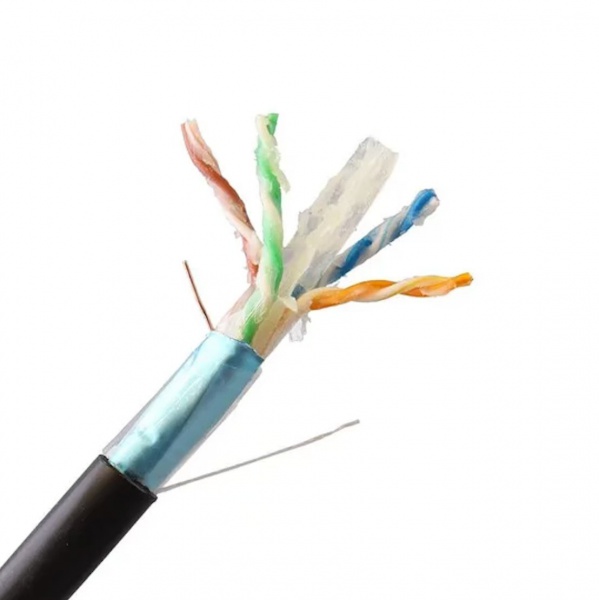
GYTC8S Armoured Outdoor Fiber Optical Cable 2-288Core
1. Place of Origin: China
2. Brand Name:Hoton Link
3.Fiber Type: 652D/G652B/G657
4. Minimum Order Quantity:20KM
5.Application:Long Distance and Communication and LAN
Long press to look detail
Long by picture save/share
INQUIRY

在线询盘 MORE+
  • 联系人 *

  • 手机 *

  • 描述

  • Submit

  • Security Code
    Refresh the code
    Cancel
    Confirm

Inquiry Content:


You have no items to require

Add Successfully

Contact us

0086-755-23002989

 info@hotonlink.com

 hotonlink

 0086-18123718803

Room 506, 5th floor No.48 Huaide South Road,Cuigang Industrial Zone 4,Fuyong Street,Baoan Shezhen China 

(Post Code:518100)

Service

Support

Downloads

Company

About Us

Contact Us


Professional Cable Manufacturer Copyright © Shenzhen Hoton Link Technology Co.,Ltd;All Rights Reserved.

Online
TOP
Online
Online Contacts Qrcode
Tel
+86-755-23002989
Whatsapp
+86-18123718803
E-mail
info@hotonlink.com
QQ
3677965196
Wechat
hotonlink
Working Hours
Monday-Sunday
Qrcode
Scan me
Qrcode
Add me
TOP
添加微信好友,详细了解产品
使用企业微信
“扫一扫”加入群聊
复制成功
添加微信好友,详细了解产品
我知道了